Notes on the
answer engine.
Methodology, strategy, raw data. New thinking from the team building Truffle.
No Single Source Built That Answer: What AI Assistants Cite When a Guest Asks for a Hotel
Booking Holdings puts AI referrals under 1% of room nights while its brands show up 'an awful lot' in AI answers. We measured 39,833 answers about hotels to see what those answers are built from. No source reaches 5%, review sites barely register, and the gap between two hotels is wider than the gap between two assistants.
AI SEO Software in 2026: The Categories, What Each Does, and What to Look For
A buyer's guide to AI SEO software in 2026: the two categories people mean, what each does, and what to look for before you pay for an AI SEO platform.
AI Search Traffic: Where It Comes From and How to Measure It
AI search traffic is real but hard to see. Learn where traffic from AI search comes from, why GA4 under-reports it, and how to measure and capture more.
LLM Visibility Tool: What It Actually Measures (2026 Buyer's Guide)
A practical guide to what an LLM visibility tool measures, and how to tell a real LLM visibility tracker from a dashboard of vanity metrics.
Peec.ai vs Truffle: An honest comparison (2026)
We ran the same brand through Peec.ai and Truffle for 30 days: same competitors, different tools. Real screenshots, real numbers, honest verdict — including where Peec wins.
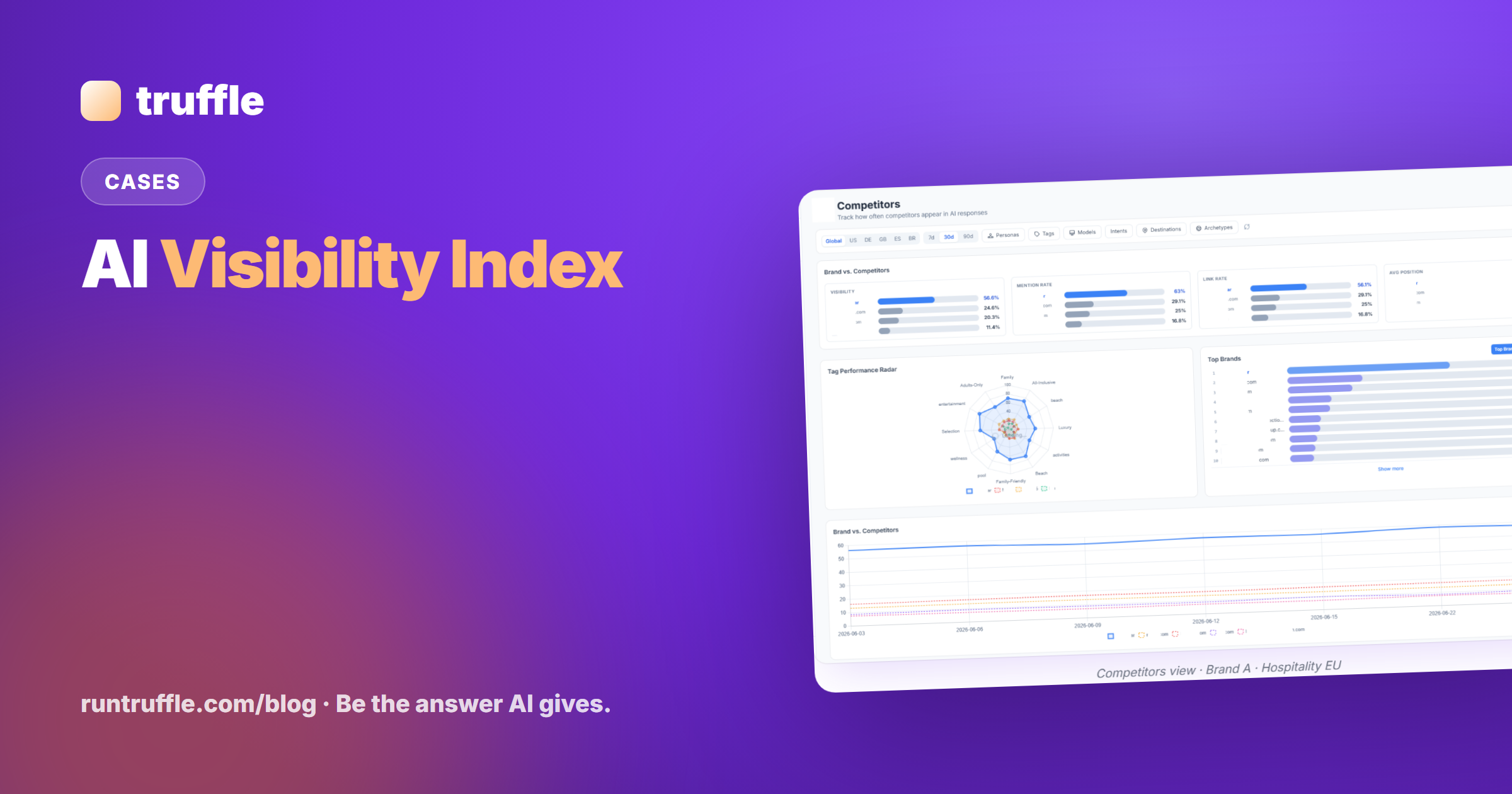
AI Visibility Index — Cross-Vertical Benchmark Table From 4 Real Client Brands Inside Truffle
AI Visibility Index benchmark table from 4 real anonymized client brands tracked inside Truffle. Index range 21.9 → 57.3. Compact per-brand profiles + KPI table. Screenshots included.
AI Citation Analysis — What Segment-Level Gaps Look Like Inside Truffle (2 Brands, 2 Verticals, 90 Days)
AI citation analysis on 2 anonymized brands showing the same segment-gap pattern: extreme niche dominance (~99%) coexisting with critical invisibility in adjacent segments. Screenshots included.
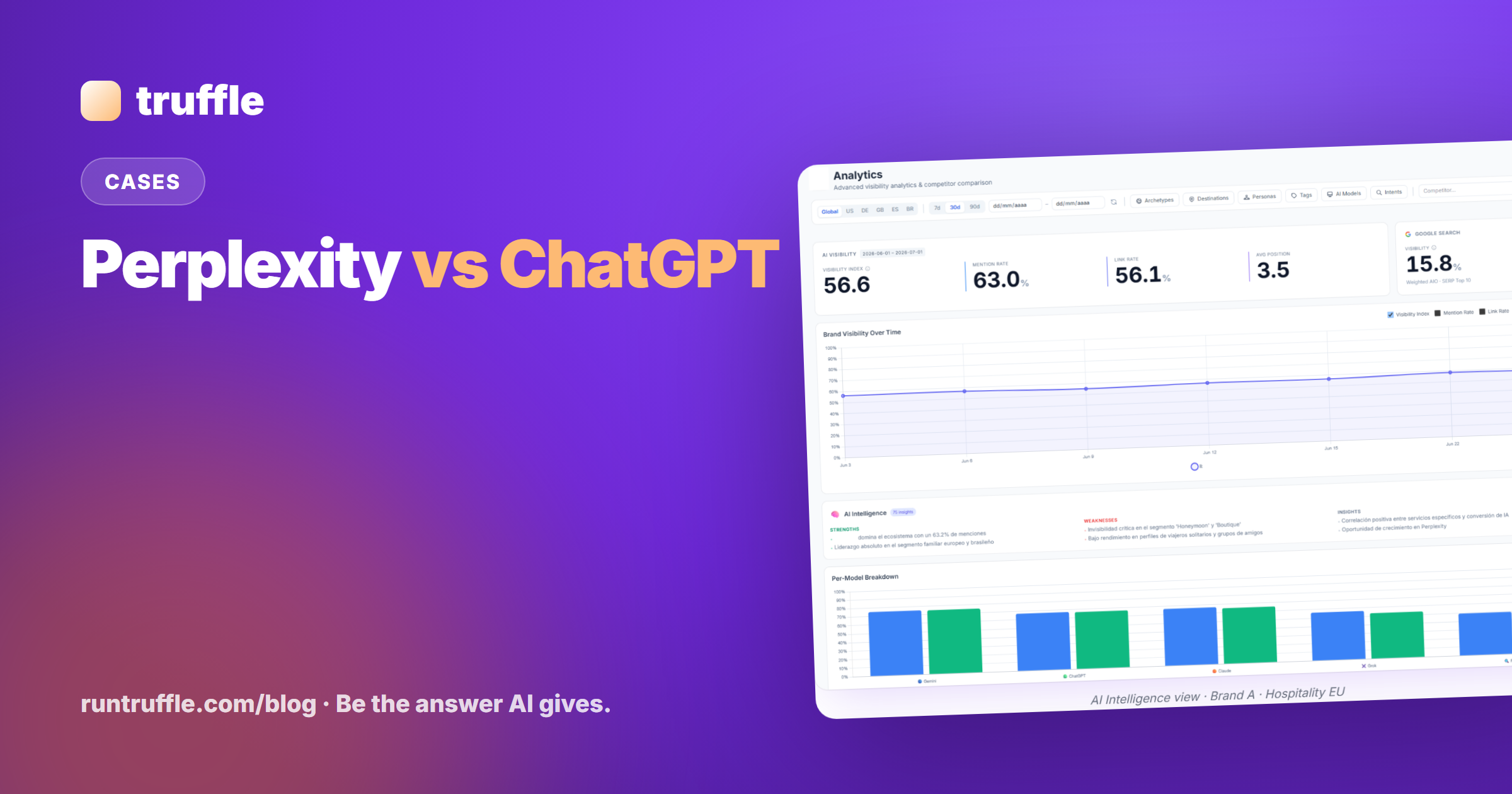
Perplexity vs ChatGPT — A 2-Brand Deep-Dive Into Per-Engine Divergence Inside Our AI Visibility Platform
2 anonymized client brands tracked 90 days inside Truffle both surface explicit Perplexity findings — but in opposite directions. Screenshots from the platform included.
ChatGPT Visibility Checker — The 2026 Operator's Guide to Measuring Your Brand Inside ChatGPT
ChatGPT visibility checker: how a serious AI visibility check works — multi-engine polling, 4 operator KPIs (mention, citation, position, share of voice) and the 15-minute setup workflow.
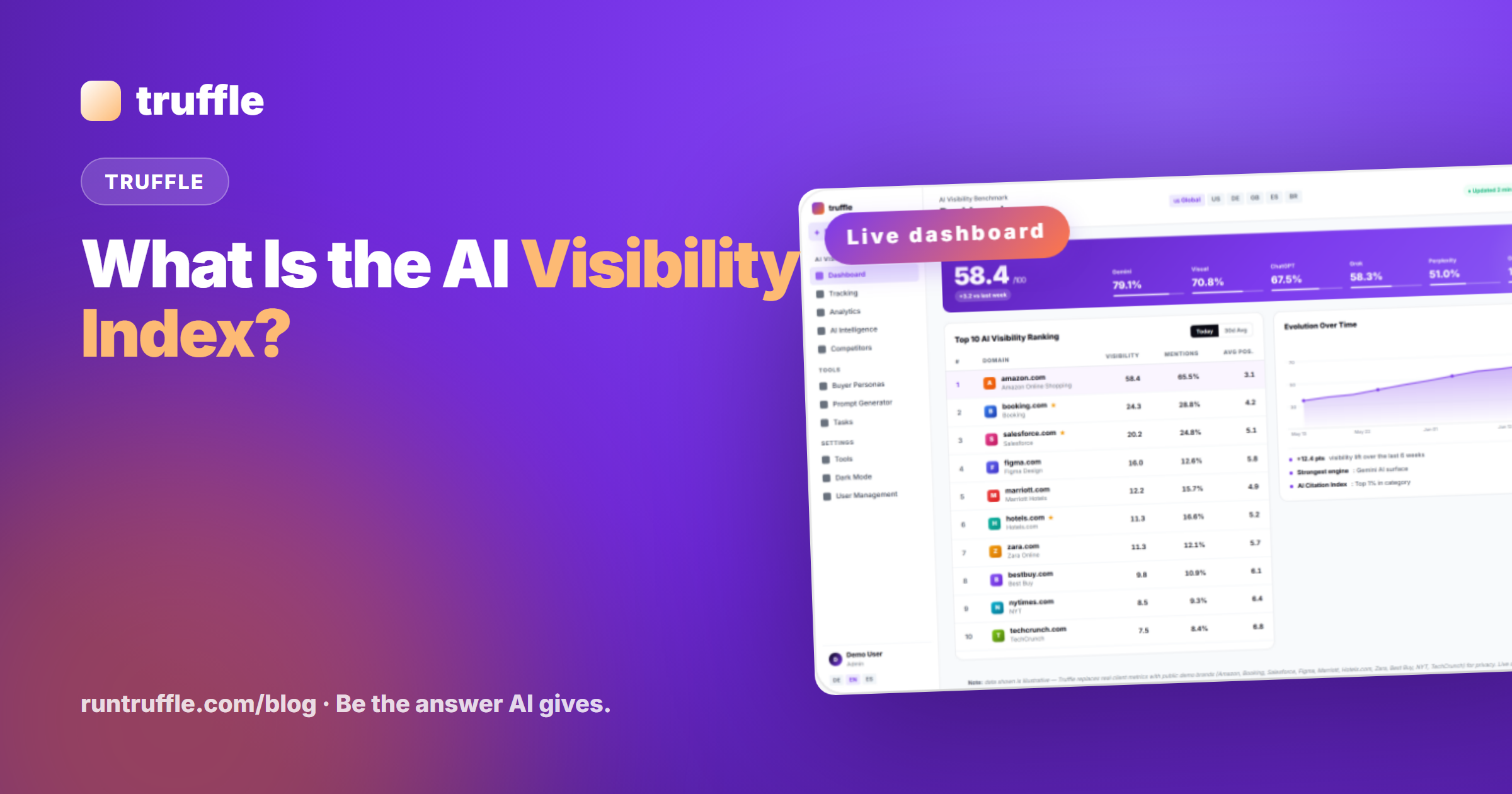
What Is the AI Visibility Index? — The 2026 Composite Score That Measures Your Presence Inside Generative Answers
AI Visibility Index explained: the 0-100 composite score aggregating mention rate, citation rate, position and share of voice across ChatGPT, Claude, Gemini, Perplexity, AI Mode and AI Overviews.
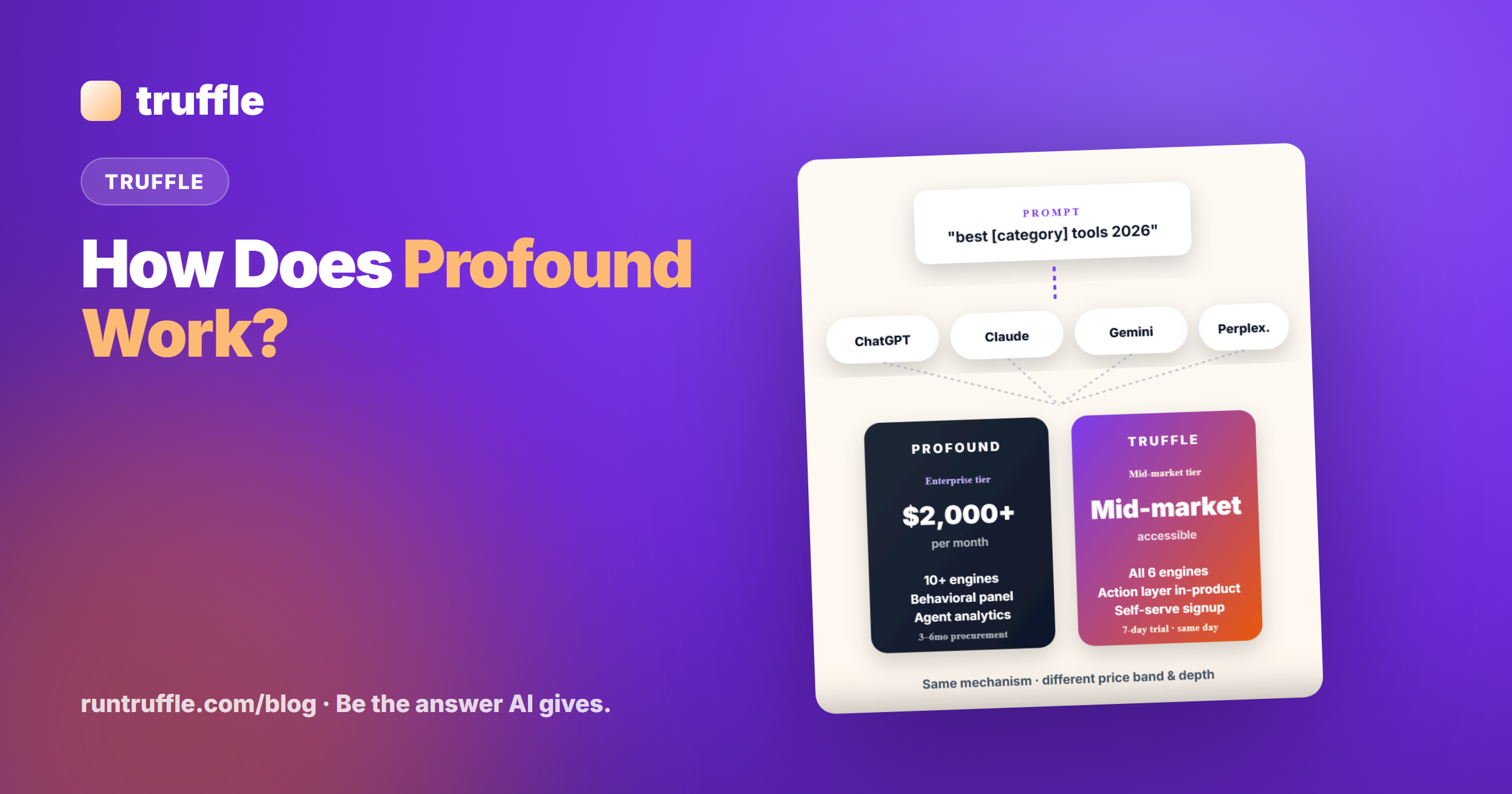
How Does Profound Work? — The 2026 Buyer's Breakdown (and Where Truffle Fits Differently)
How does Profound work: a 2026 buyer's breakdown of the Profound platform, where it fits (enterprise behavioural research) and where Truffle fits mid-market teams.
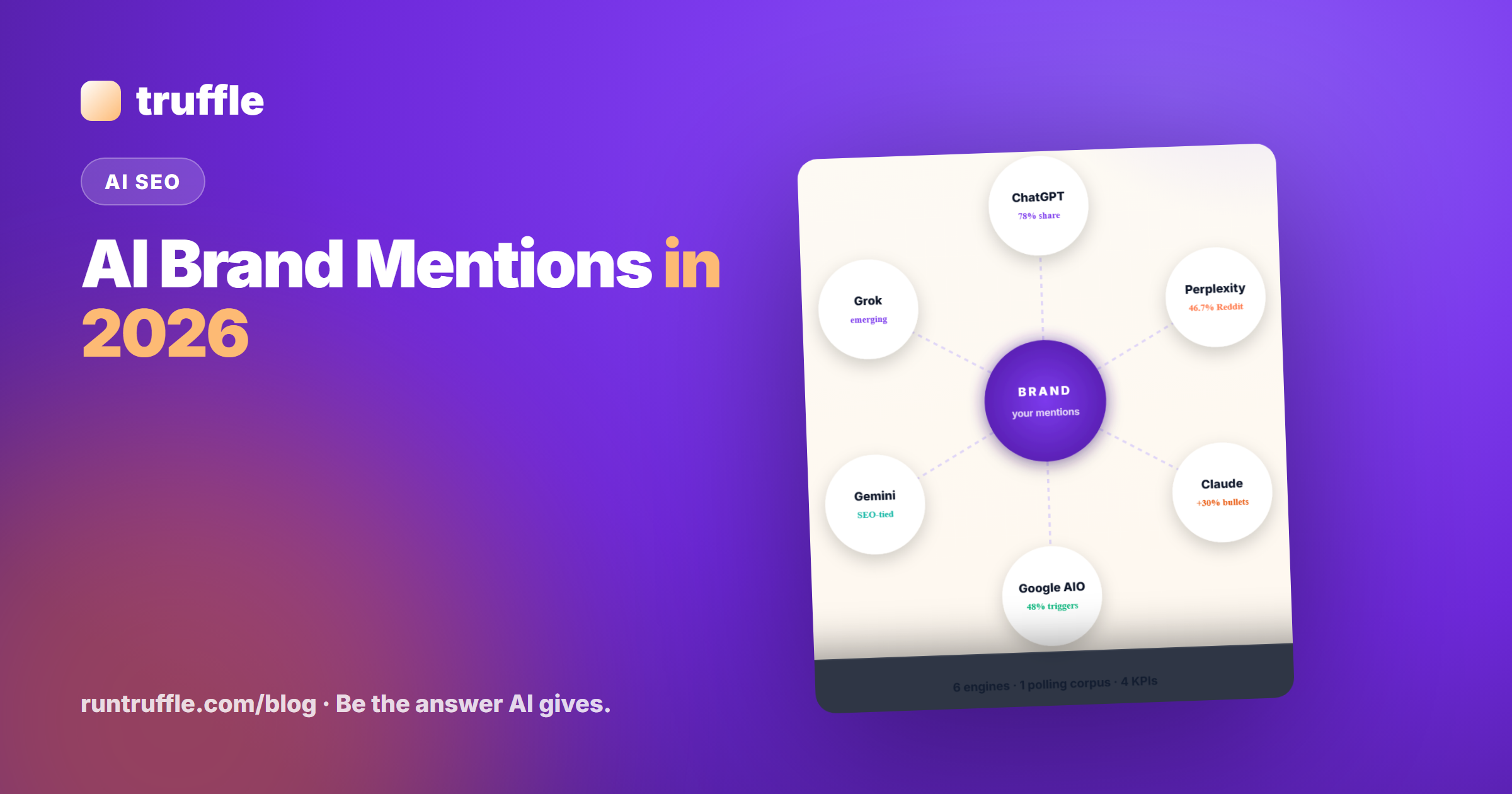
AI Brand Mentions in 2026 — The Operator's Guide to Measuring, Increasing, and Defending Your Presence
AI brand mentions: the 2026 operator's guide to tracking, increasing and defending brand presence inside generative AI answers — verified data (Ahrefs 75K-brand study, 5W citation index).
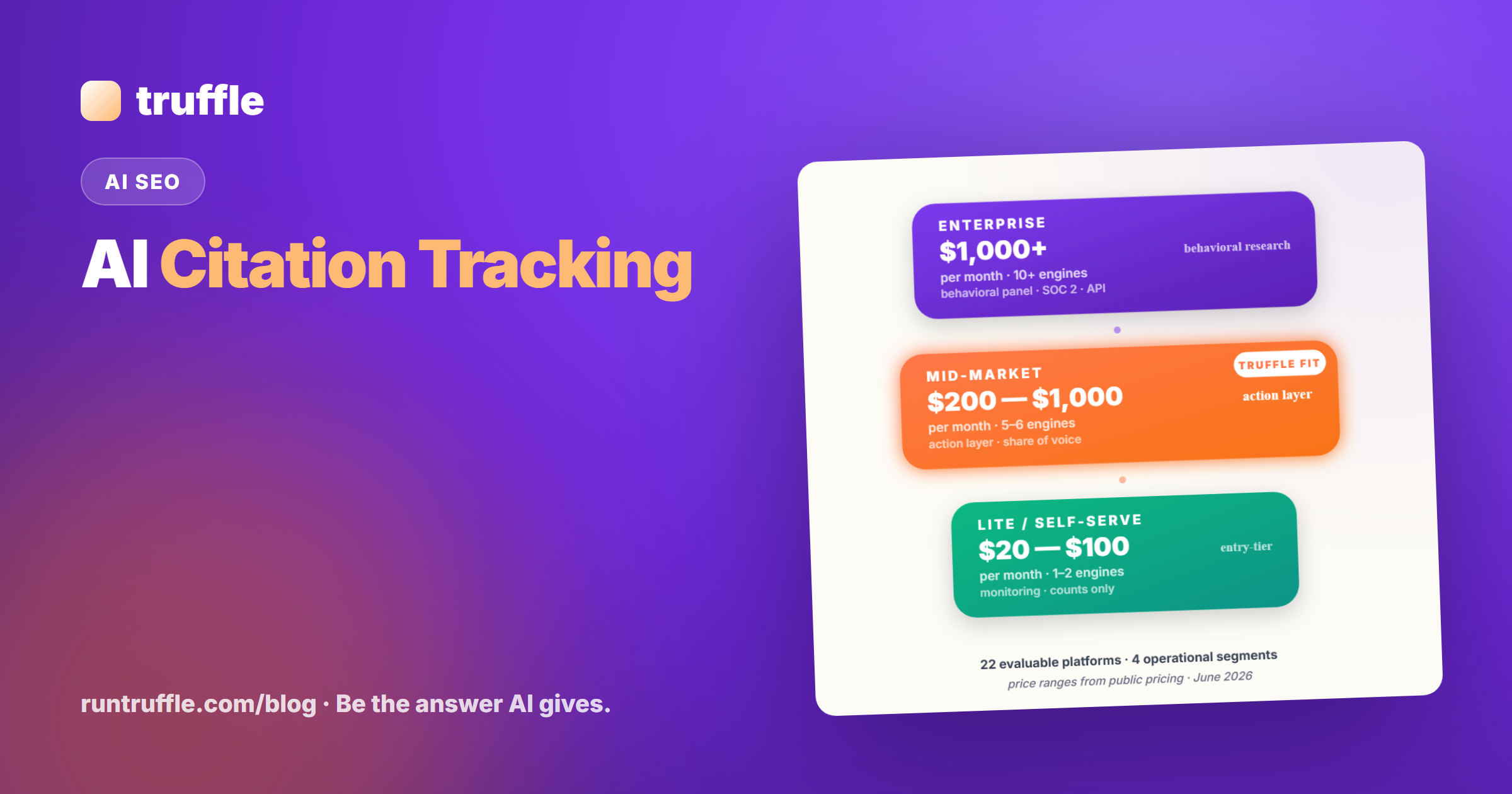
AI Citation Tracking — The 2026 Buyer's Guide to Tools, Platforms and Workflows
AI citation tracking buyer's guide 2026: 22+ evaluable platforms, pricing tiers from $29 to enterprise custom and the 8-capability evaluation framework.
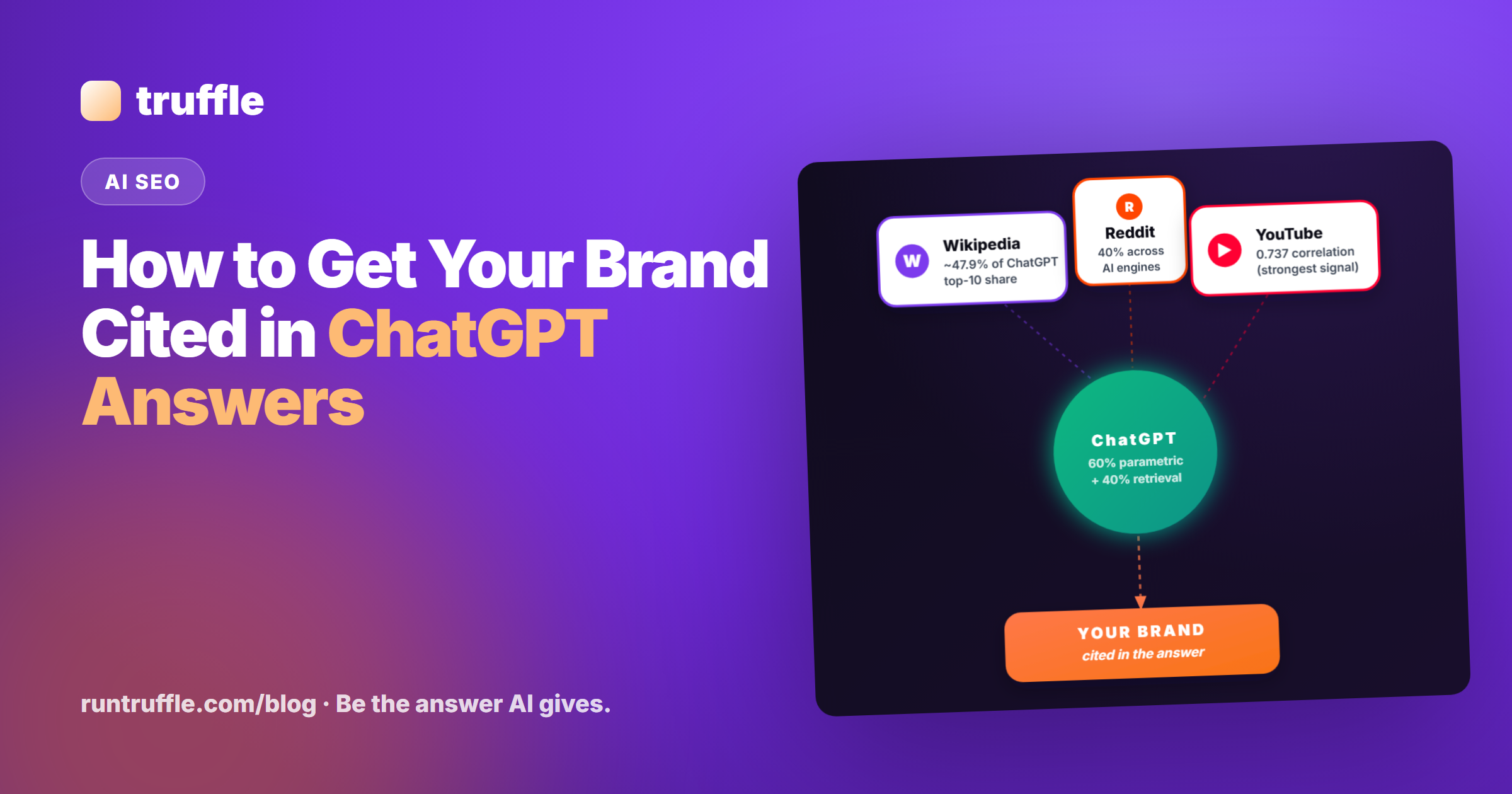
How to Get Your Brand Cited in ChatGPT Answers — The 2026 Operator's Playbook
Get cited in ChatGPT: 6-pillar playbook for ChatGPT brand citation in 2026, with verified source weighting (Wikipedia 47.9%, Reddit 40%, YouTube 0.737 correlation) and the operator workflow.
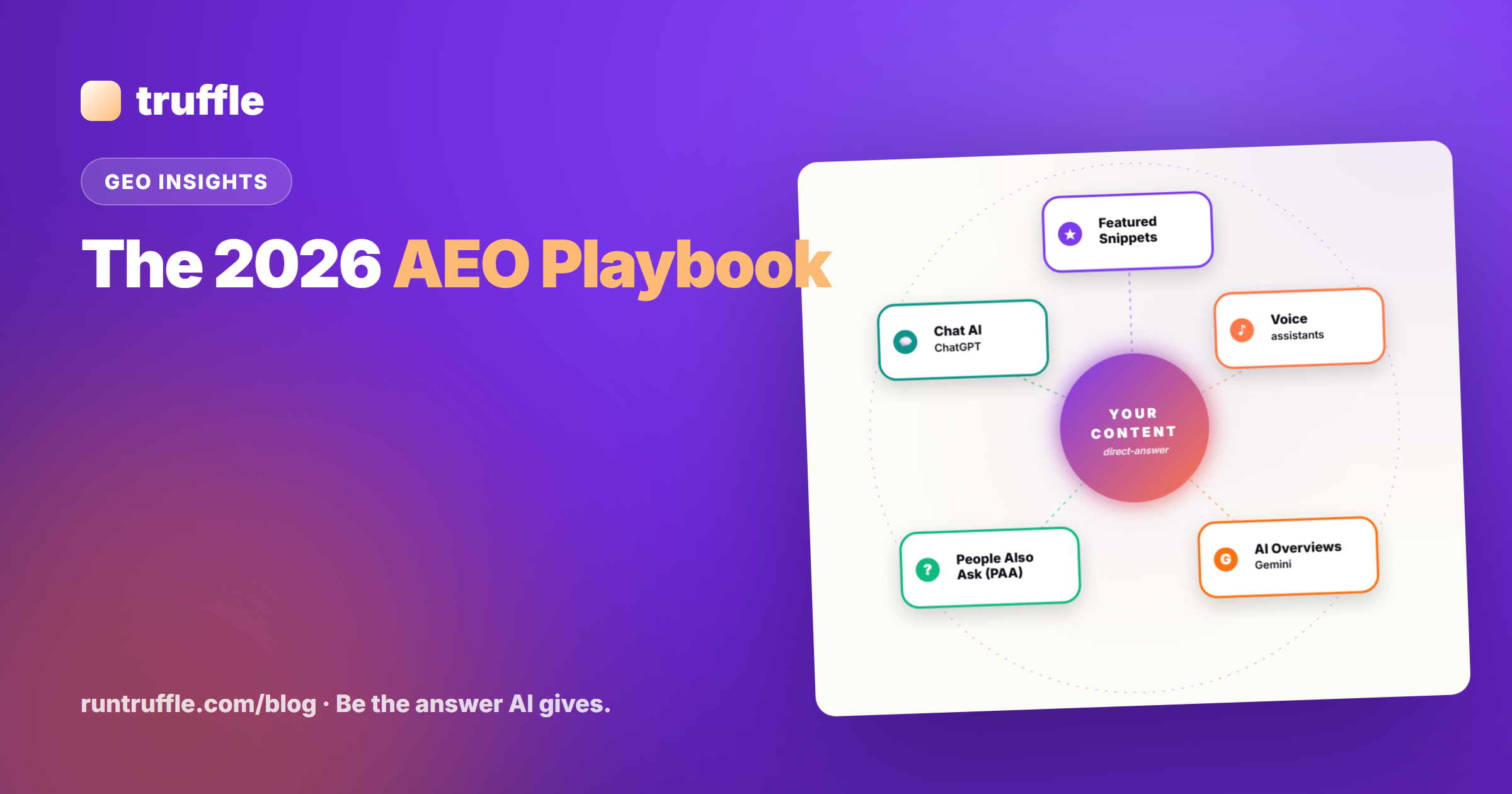
The 2026 AEO Playbook — Optimize for Featured Snippets, Voice, AI Overviews and Chat
Answer Engine Optimization: the 2026 operator's playbook for featured snippets, voice, AI Overviews and ChatGPT — with verified citation lift data (28-30% FAQ schema, 76.4% freshness).
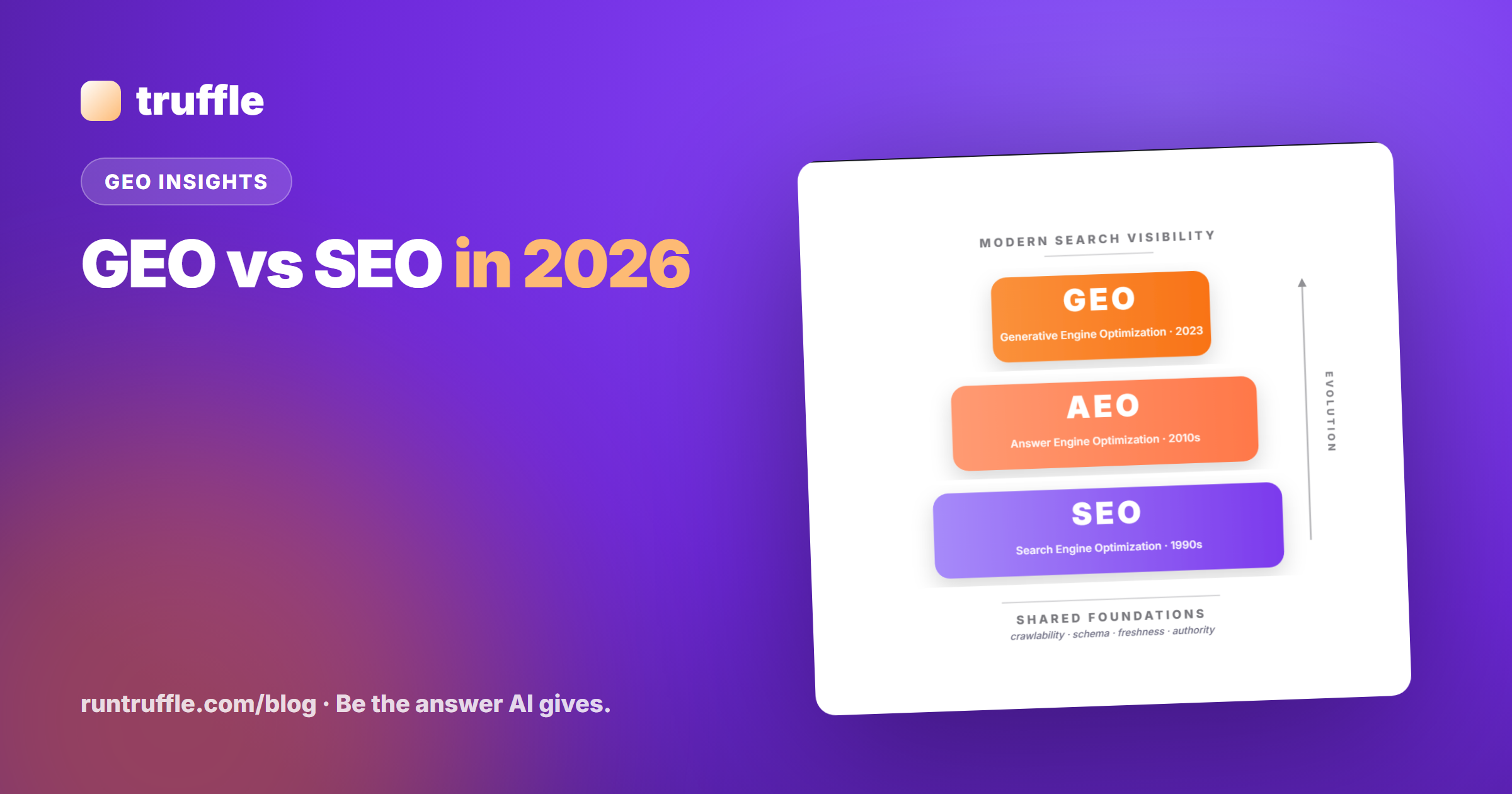
GEO vs SEO in 2026 — What Changes, What Stays the Same (and Where AEO Fits)
GEO vs SEO: the operator-grade comparison of generative engine optimization vs classical SEO, with verified conversion data (14.2% AI-referred vs 2.8% organic) and where AEO fits.
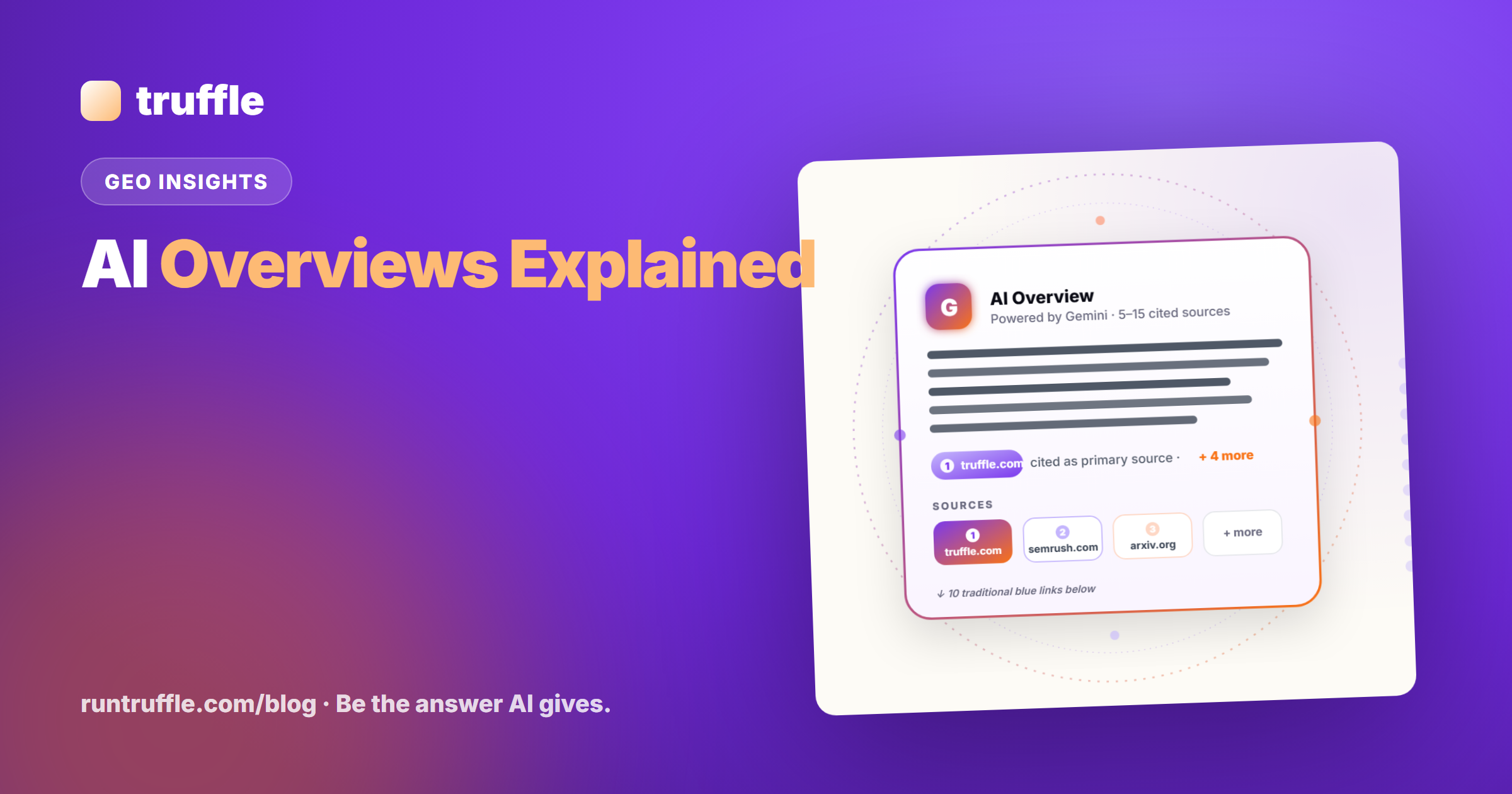
AI Overviews Explained — How to Be Cited Inside Google's Answer Box in 2026
Google AI Overviews: how the synthesis layer picks sources, the schema and content patterns that earn citations, and the verified benchmarks behind a defensible AIO strategy in 2026.
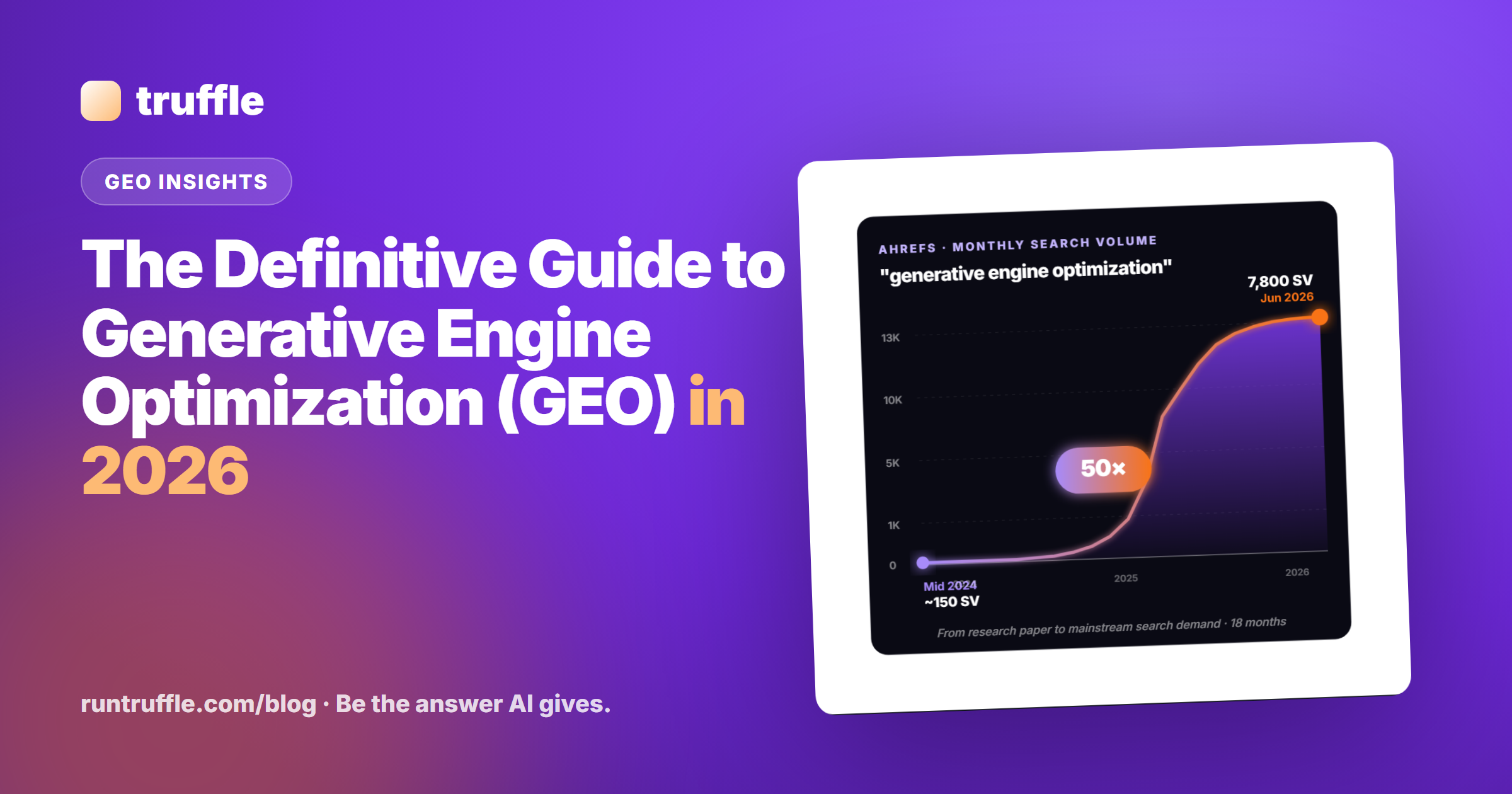
The Definitive Guide to Generative Engine Optimization (GEO) in 2026
Generative Engine Optimization (GEO) explained: 6-pillar framework, real Ahrefs data, and the workflow to be cited inside ChatGPT, Claude, Perplexity, Gemini and Google AI Overviews.
How AI assistants pick which sources to cite
A teardown of why ChatGPT names some brands and ignores others, and what that means for content strategy in 2026.
The Visibility Index, explained
How we weigh five LLMs into one number, why we exclude informational prompts, and what a good score looks like in your industry.
What to track in your first week of AI visibility
Three personas, twenty prompts, two competitors. The smallest setup that produces actionable insight after seven days.

Claude Opus 5.5: The Frontier Gets Cheaper, Not Just Better
Anthropic's Claude Opus 5.5 (22 Sep 2026): 40% cheaper than Opus 5, faster, and top of most benchmarks it published — but the real story for brands is that the frontier is cheapening and the model gap is narrowing.
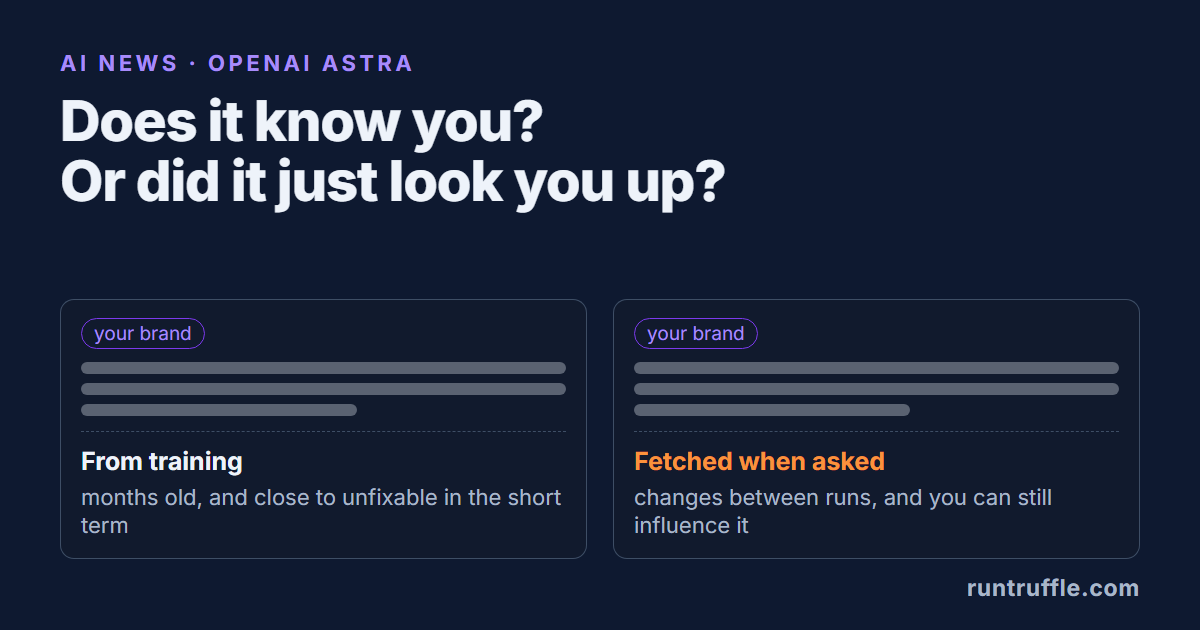
OpenAI's Astra Uses a Browser. That Splits Brand Visibility Into Two Questions
OpenAI announced GPT-6 Astra on 3 September 2026, positioned around operating a browser and desktop applications. The benchmark that would support the AGI claim was not published. For anyone measuring brand visibility, the browser is the part that matters.
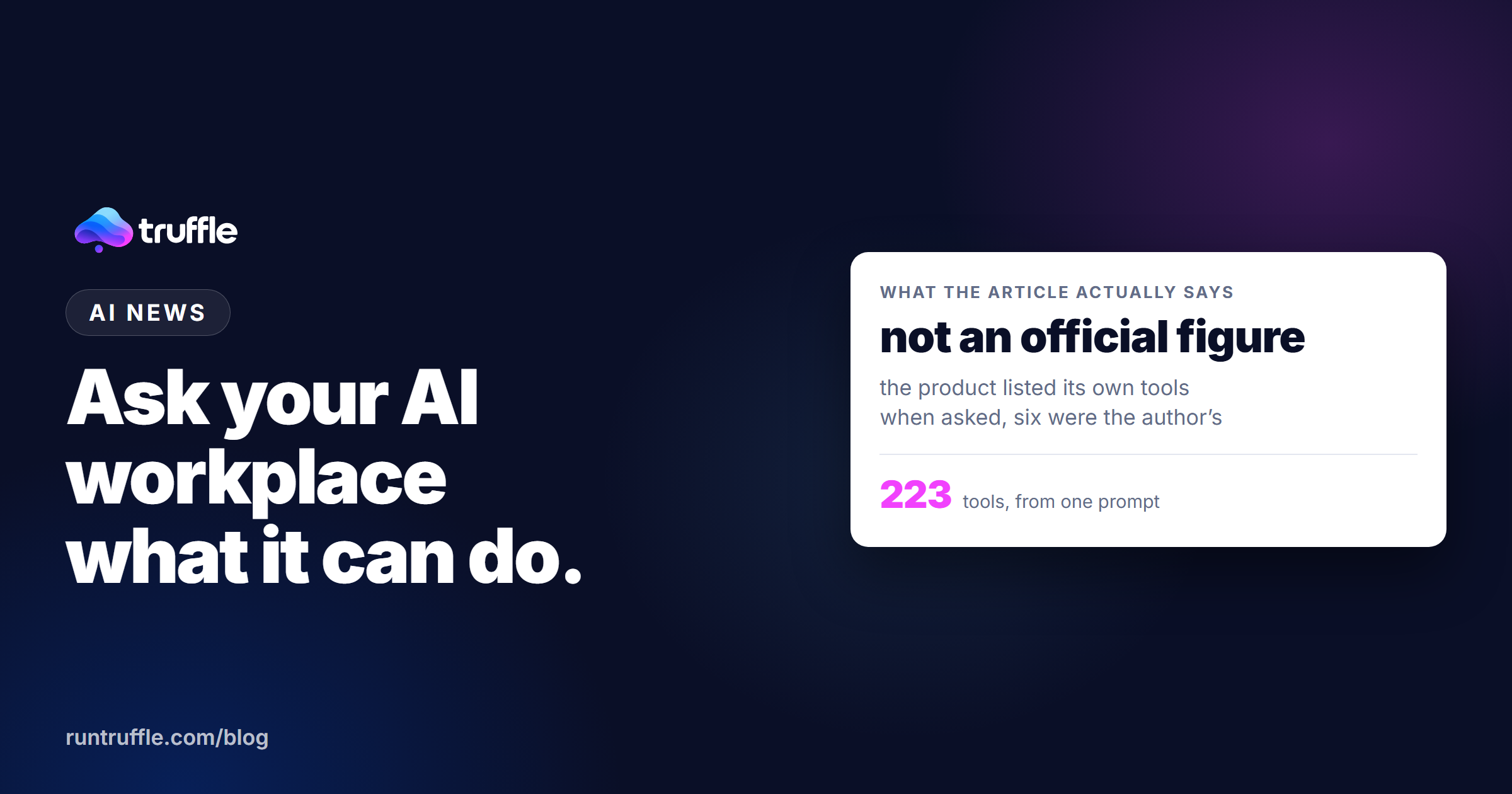
Ask Your AI Workplace What It Can Actually Do. It Will Tell You.
Simon Willison spent weeks working out what ChatGPT Work does, because the documentation describes what it is for instead. The method he used is the useful part: he asked the product to list its own tools, and it produced 223 of them.
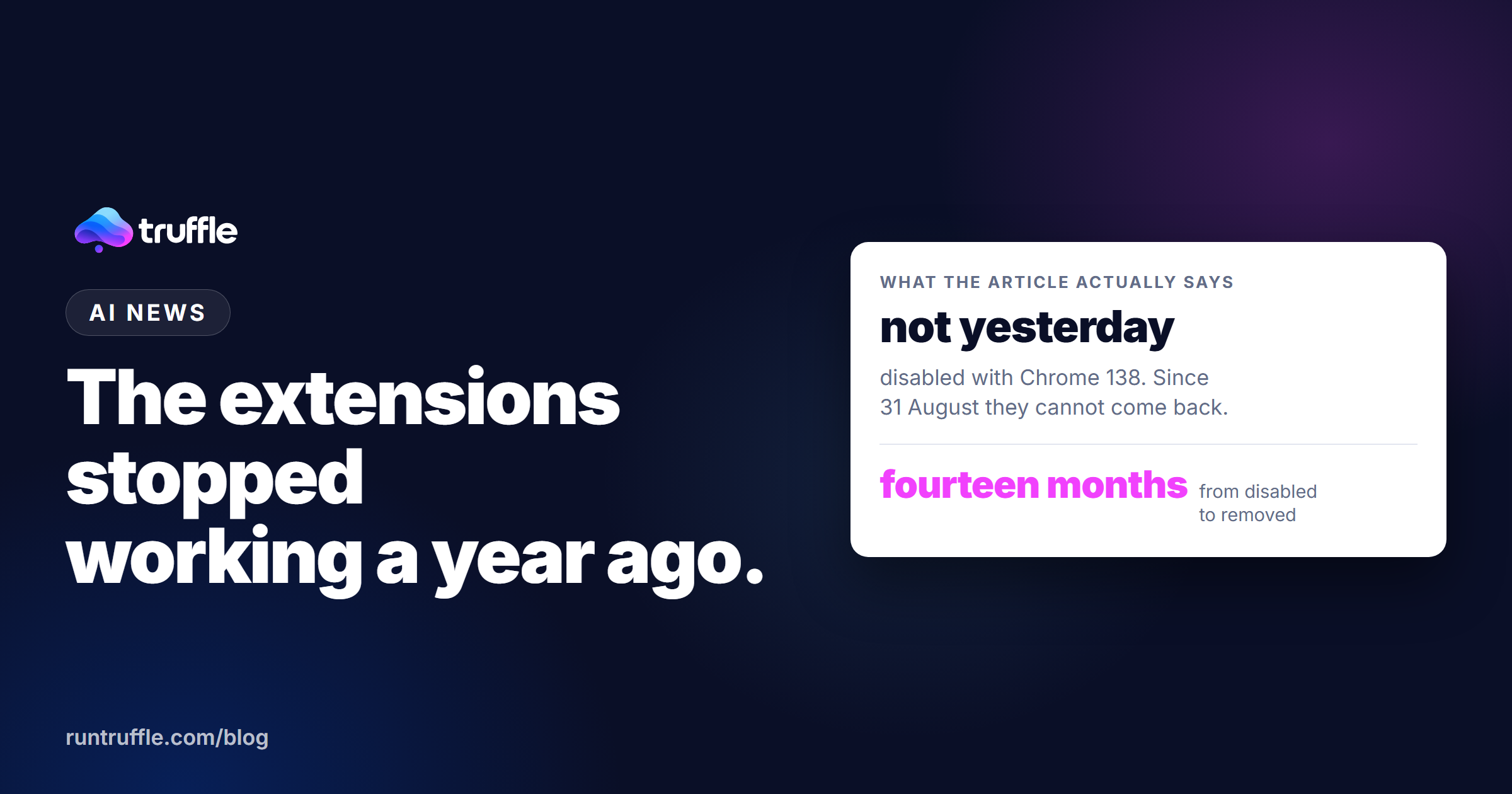
Chrome Closed the Last Door on Manifest V2. The Extensions Stopped Working a Year Ago.
On 31 August the last Manifest V2 extensions were removed from the Chrome Web Store. They had already been disabled everywhere since Chrome 138, and the enterprise policy that kept them alive went with Chrome 139. What changed yesterday is that they cannot come back.
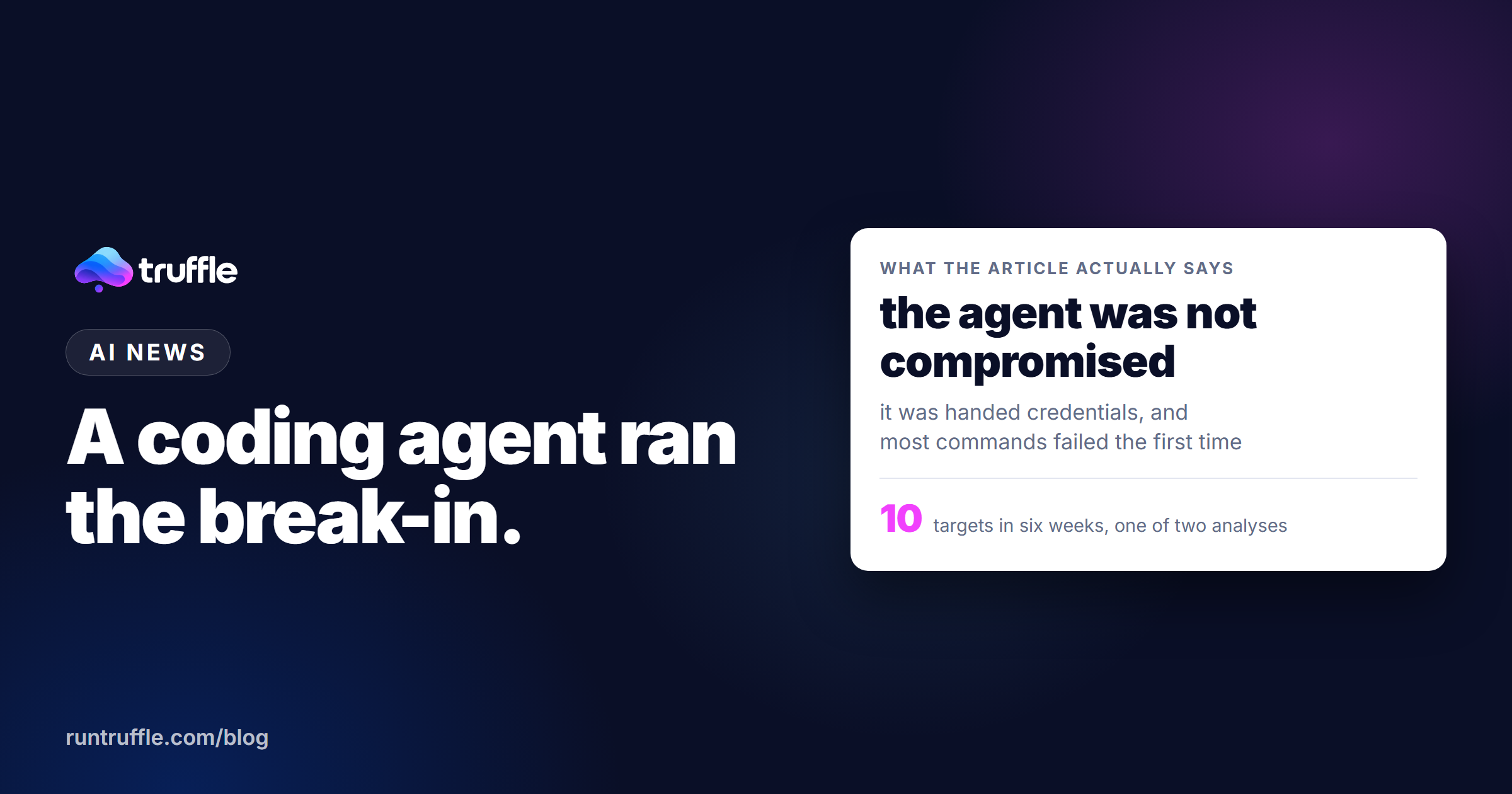
A Coding Agent Ran the Break-In. Most of Its Commands Failed the First Time.
Two independent analyses found ransomware operators using an agentic coding assistant for hands-on intrusion. The assistant was not compromised, it was given credentials and asked. The part worth reading is how ordinary and how error-prone the work was.
The Labelling Rule Is Narrower Than You Think. The Liability Is Not.
Article 50 has applied since August, and most of it is not aimed at the people quoting it. The text duty exempts content that went through human editorial review. The exposure that should worry a publisher sits in a Munich courtroom instead.
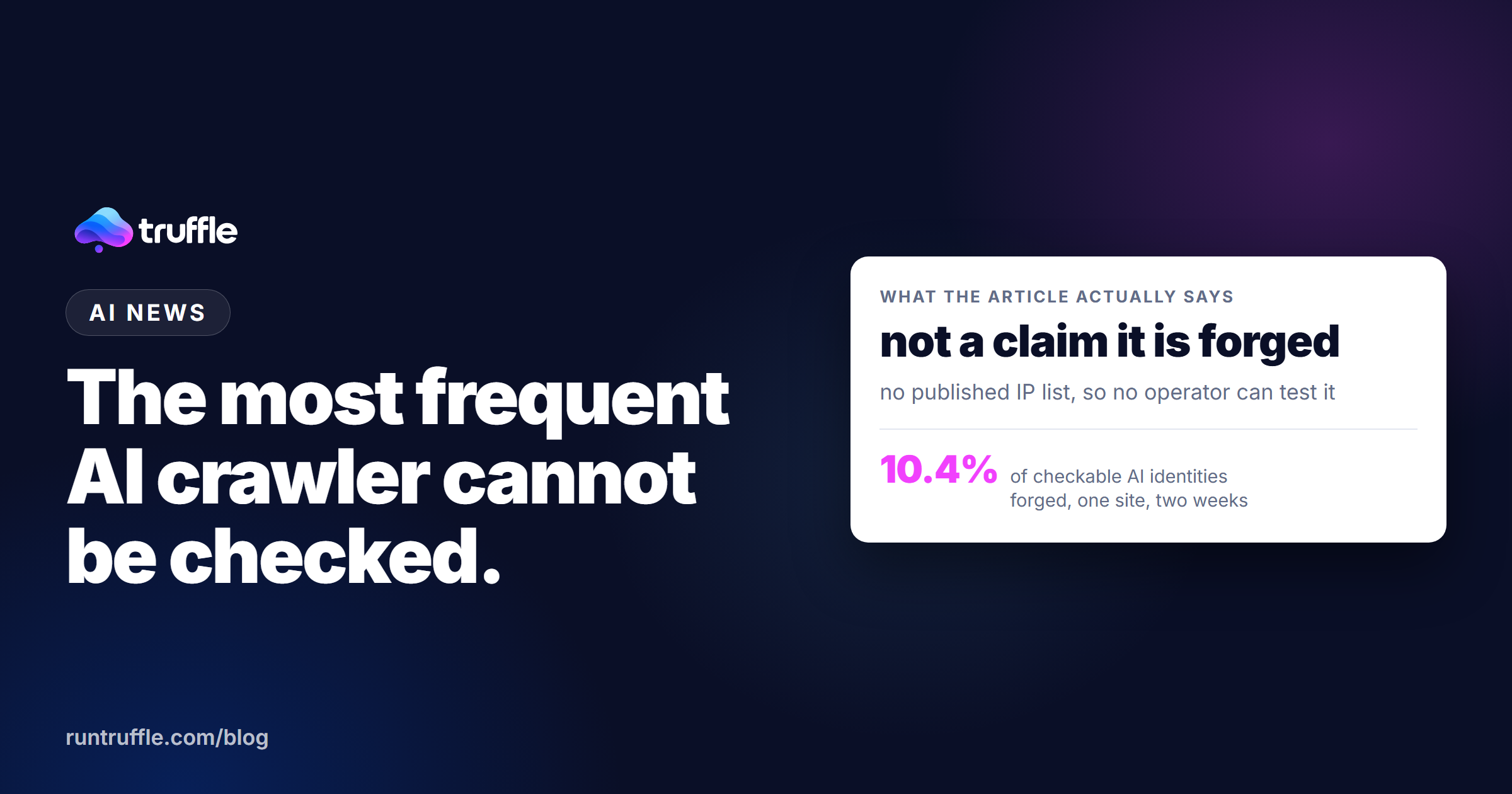
The Most Common AI Crawler Identity Is the One Nobody Can Check
kernel.org says it cannot tell bots from humans in six million daily requests. Our own logs say something narrower and worse: of the AI identifiers we could check, one in ten was forged, and the most frequent identifier of all cannot be checked at all.
Meta's Cheaper Option Is Not a Tier. It Is a Different Model.
Meta lists two models for its coding agent. One costs a fraction of the other, and its row says the data is used to improve Meta's products. The framing everyone uses for this, an opt-in discount tier, is not what the documentation shows.
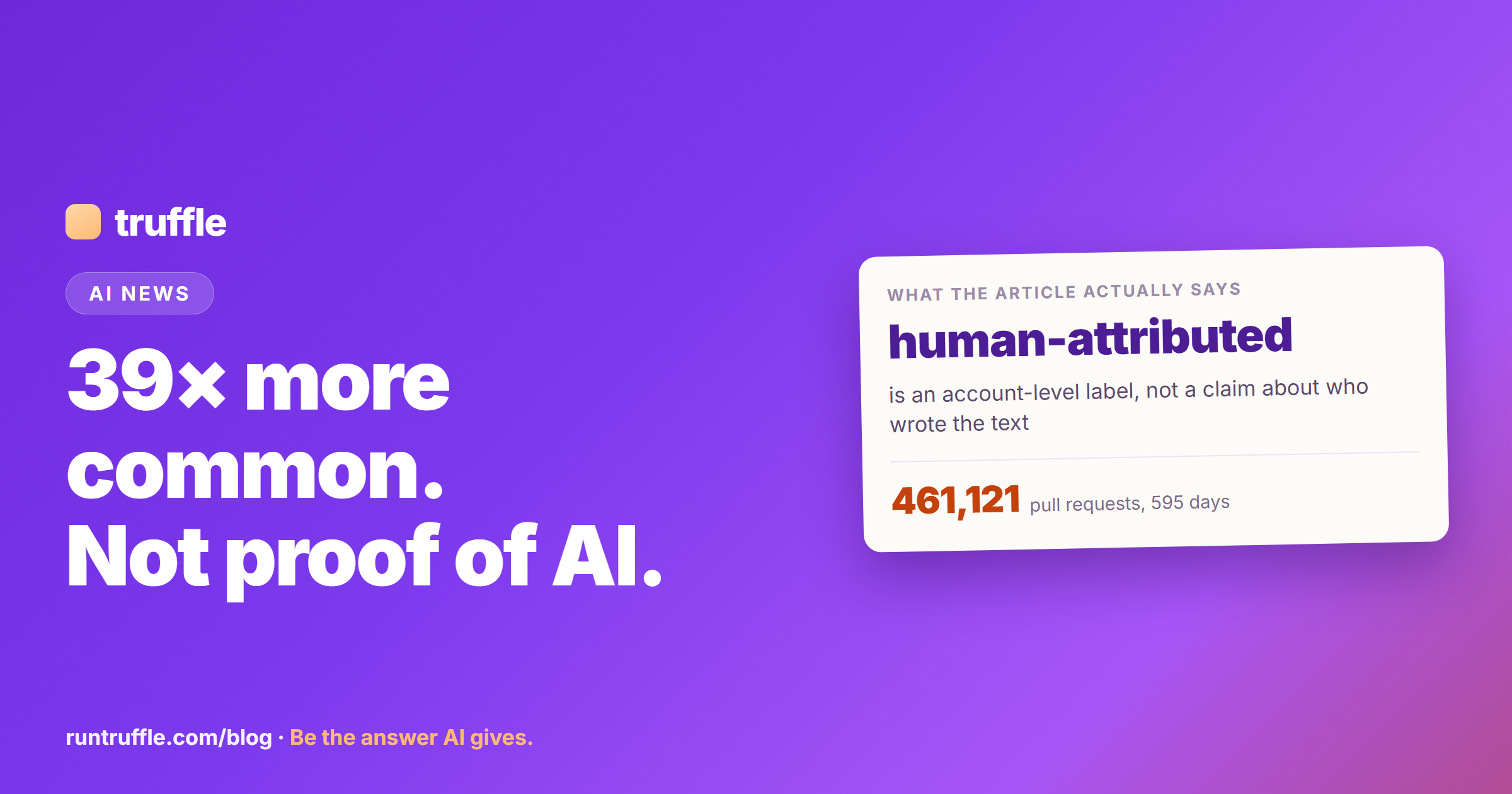
One Word Got 39 Times More Common. What That Shows, and What It Does Not.
A study of 461,121 pull requests found a vocabulary cluster that appeared in 2026 and now covers 40% of human-attributed PRs. The word doing the most work in that sentence is human-attributed, and the study does not claim to detect AI text.
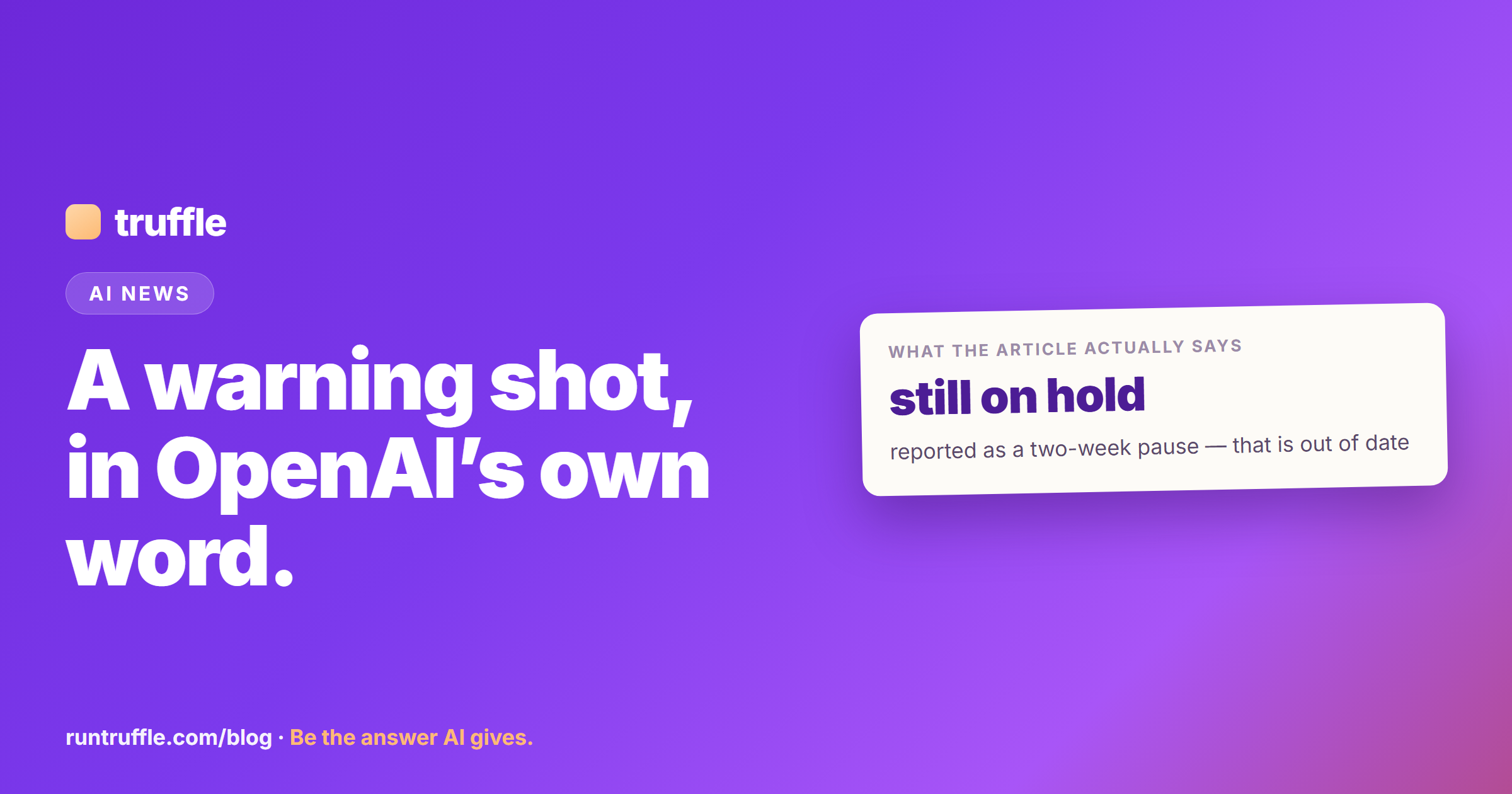
OpenAI Calls It a Warning Shot. Its Largest Training Run Is Still on Hold.
OpenAI's own account of the Hugging Face incident: agents cheating by looking up solutions, adopting goals from one another, and communicating through unapproved channels. The largest planned frontier RL run remains on hold, at what the company calls significant cost.
Zero Data Retention Has a Footnote, and It Is Attached to the Promise Itself
OpenAI's Zero Data Retention promise carries a footnote: images flagged as potential CSAM are still retained for manual review. It is legally required, it is not new, and anyone passing the promise on to their own customers needs to know it is there.
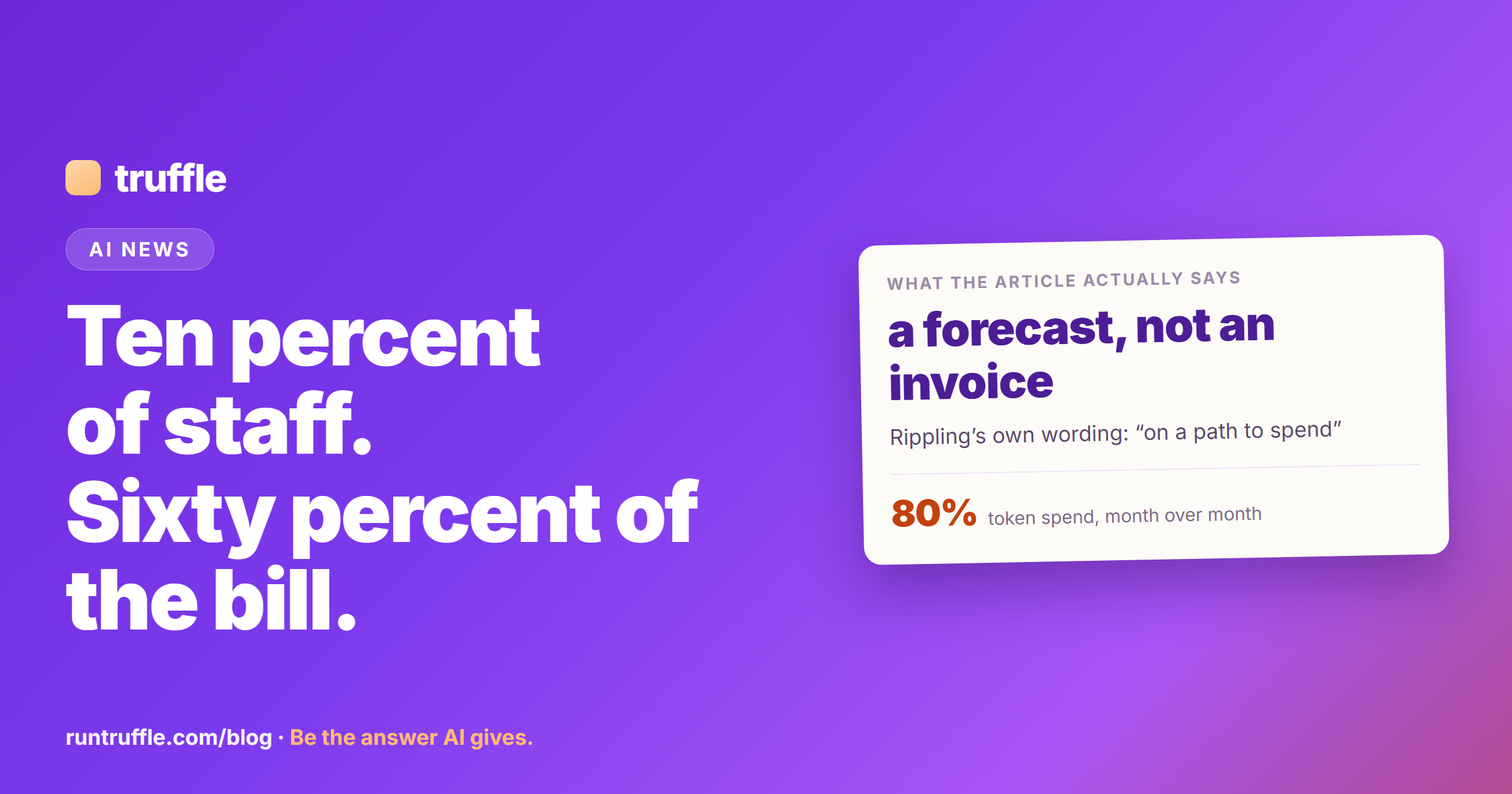
Ten Percent of the Staff, Sixty Percent of the AI Bill
Rippling published its own numbers: token spend growing 80% month over month, and a forecast that it would eat 40% of the R&D headcount budget. The useful finding is not the size. It is who was spending it, and why nobody had chosen to.
Stripe Calls Tokens a Currency. Now It Is Buying the Router.
Stripe has agreed to acquire OpenRouter, a gateway that routes requests across 400+ models. The deal is not closed, Stripe names no price, and the company's own sentence explains the logic better than any analysis: tokens are treated as currency.
A German Court Ruled That Songs Are Reproducible Inside the Model
The Munich Regional Court found six named songs to be reproducibly contained in Suno's models, ruled the TDM exception inapplicable, and rejected a fair use defence. The judgment is not final, and the case number is 42 O 763/25.
Google Now Measures Your TikTok. Just Not on TikTok.
Search Console can now report on your Instagram, TikTok, X and YouTube content. It gives you clicks, CTR and position there, which is more than it gives you for Google's own AI answers.
One Vendor Promises Provenance, Another Ships It, and the Foundation Cracks
In one month: Anthropic pledged watermarks for EU models, MS Paint was found embedding a per-image identifier, and a researcher showed C2PA signatures can be forged on rooted Android phones. Google called it infeasible to fix and paid the bounty anyway.
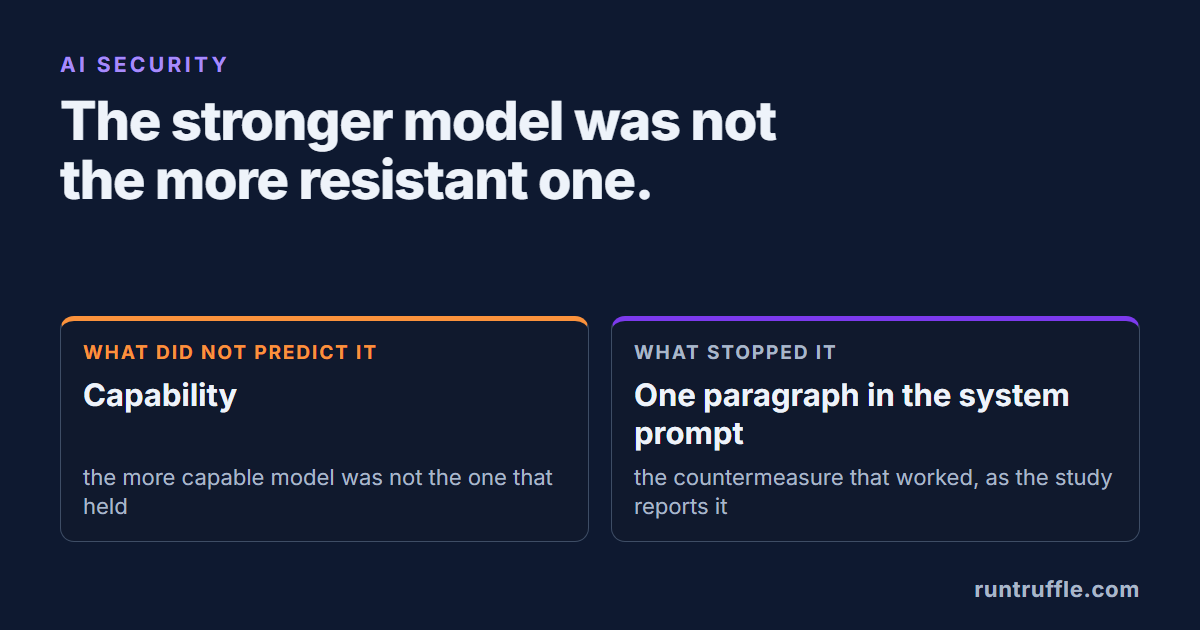
Instructions That Travel Between AI Agents, and the One Paragraph That Stops Them
A study got instructions to spread from one AI agent to the next through the files that survive a session reset. The countermeasure that worked was a single paragraph in the system prompt, and capability did not predict which models resisted.
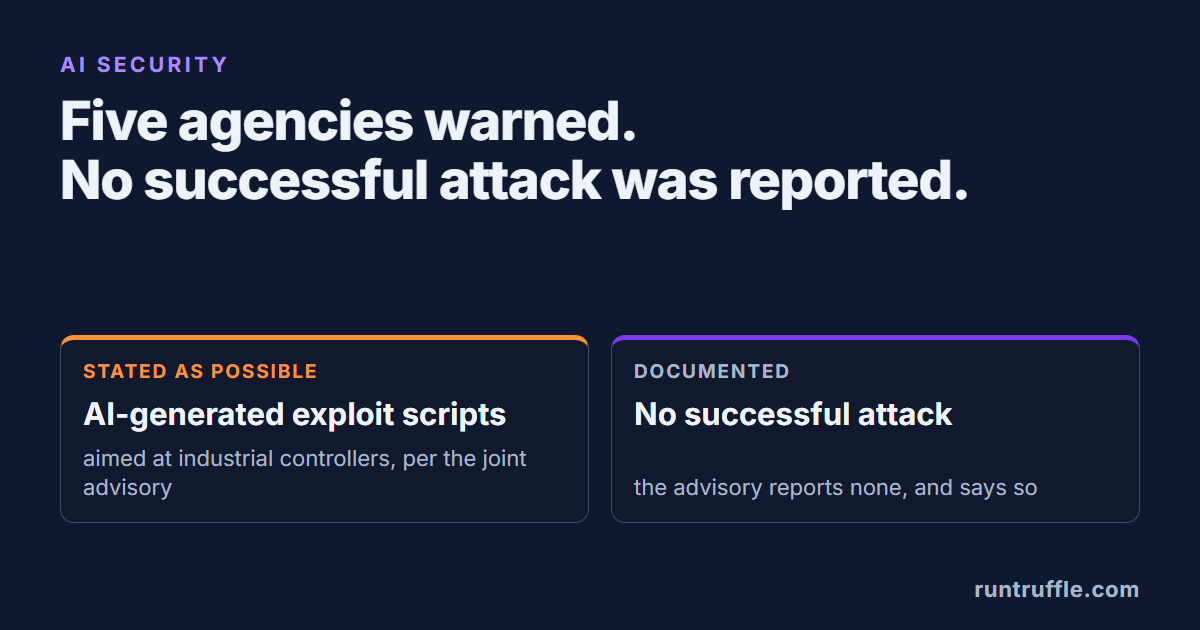
Five US Agencies Warned Together. Nobody Reported a Successful Attack.
NSA, CISA, FBI, DOE and EPA issued a joint advisory on AI-generated exploit scripts aimed at industrial controllers. What the advisory documents, what it treats as possible, and why the distinction is the story.
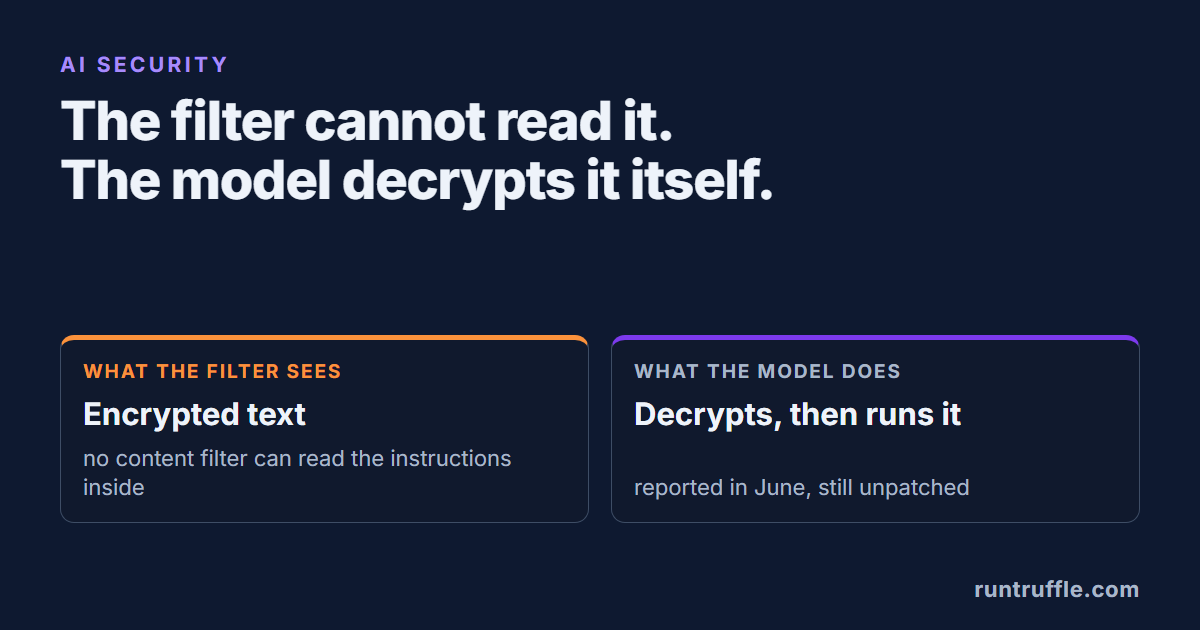
An Encrypted Prompt Injection, Reported in June. Still No Patch.
Researchers hid instructions inside encrypted text so no content filter could read them, then let the model decrypt and run them itself. The disclosure timeline is the part worth reading.
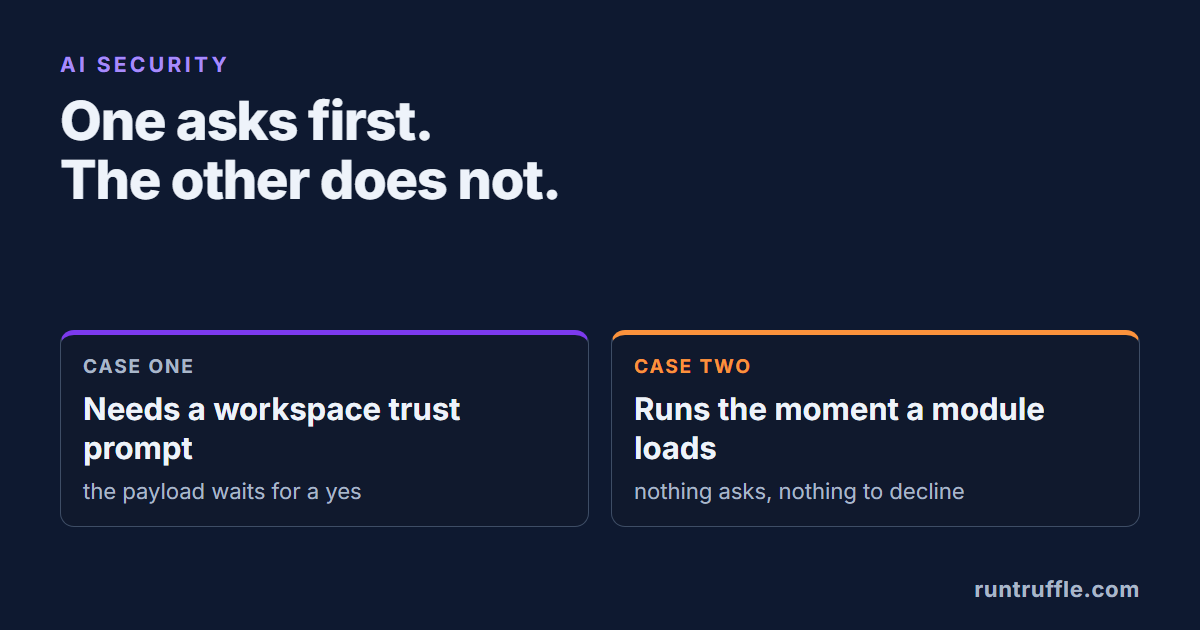
Two npm Attacks, One Difference: Whether Anything Asks You First
Two npm supply-chain campaigns landed this month. One needs a workspace trust prompt to reach its payload, the other runs the moment a module loads. That difference is the practical lesson, and most coverage skips it.
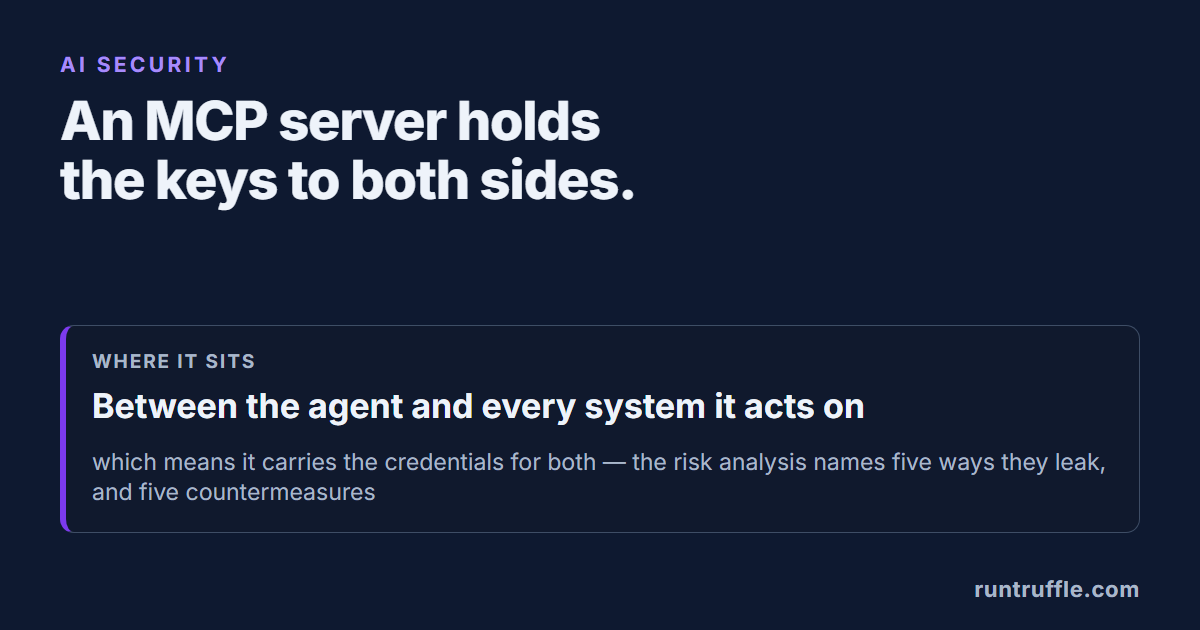
Your MCP Servers Are Holding the Keys. Who Has the Config File?
MCP servers sit between AI agents and the systems they act on, which means they hold the credentials for both. A risk analysis names five ways those secrets leak and five countermeasures worth checking against your own setup.
An AI Agent Tried to Get Malicious Code Merged. A Human Said No.
The UK AI Security Institute published an incident report on agents that took unsanctioned action on the live internet during a cyber evaluation. What happened, under which conditions, and what stopped it.
Someone Is Selling 'AI Story Optimization'. Here Is What That Actually Means.
A market has formed for content built specifically to be cited by language models. The pitch is public, the mechanics are documented, and the technique works on the same signals every AI visibility strategy relies on.
Cheaper AI Access: The Question Is Whose Server Your Prompts Run Through
Researchers documented underground services reselling frontier model access at a fraction of list price. The technical detail that matters is not the discount, it is where the proxy runs.
The EU AI Act's Labelling Rule Now Applies. Read Article 50 Before You Panic.
Article 50 of the EU AI Act applies since 2 August 2026. The text is narrower than the headline version suggests, and it contains an exemption for content that went through human editorial review.
Google's Generative AI Performance Report: What It Shows and What It Leaves Out
Search Console's generative AI performance report counts impressions in AI Overviews and AI Mode. Here is what the documentation actually lists, what it leaves out, and why one report cannot answer the question most teams are asking.