
AI Search Traffic: Where It Comes From and How to Measure It
People are researching purchases inside ChatGPT, Perplexity, Gemini, and Google's AI Overviews. They ask a question, read a synthesized answer, and sometimes click a cited source. That click is AI search traffic, and most analytics setups barely register it.
If your GA4 traffic looks flat while your category is clearly shifting toward AI answers, you are probably measuring the wrong thing. This post covers what AI search traffic actually is, why it under-reports, and how to both measure it and get more of it.
What counts as AI search traffic
AI search traffic has two parts, and only one of them shows up as a session in your analytics.
The first part is direct referral traffic: someone reads an AI answer, clicks a citation or a linked source, and lands on your site. That visit can carry a referrer like chatgpt.com, perplexity.ai, or gemini.google.com. This is the countable slice, and it is growing, but it is smaller than the real impact.
The second part is influence. An AI model recommends your brand, describes your product, or names you as the answer, and the user never clicks. They just remember. Later they search your brand directly, type your URL, or convert after a few touches. That is zero-click influence, and it drives a lot of AI-driven search traffic that never gets attributed to AI at all.
Both matter. The mistake is judging AI search only by the referral clicks you can see, because the influence half is often the bigger number.
Why AI search traffic under-reports in GA4
Open GA4, look at your referral sources, and AI search traffic will look tiny. There are a few reasons, and none of them mean the traffic is not real.
Referrers get stripped or bucketed. Some AI products pass a referrer, some do not, and some clicks arrive with no referrer and fall into Direct. So a real visit from Perplexity can land in your Direct traffic pile, indistinguishable from someone typing your URL.
Zero-click influence has no session. If a model recommends you and the user acts later, GA4 records a branded search or a direct visit. The AI touch that started it is invisible. Your last-click attribution gives the credit to Google or Direct.
Assisted conversions hide the pattern. AI often sits early in the journey, during research. It rarely gets the final click, so in a last-click report it looks worthless even when it is doing real work. If you only read AI Overviews traffic through last-click revenue, you will underrate it every time.
| What's happening | In GA4 | Real impact |
|---|---|---|
| Direct referral clicks | Partial — some counted, some bucketed as Direct when the referrer is stripped | The visible slice. Real and growing, just smaller than the rest. |
| Zero-click influence | ✗ — no session recorded at all | Often the biggest driver. Surfaces later as branded search or Direct. |
| Assisted conversions | Hidden — AI rarely gets the final click, so it looks worthless | AI sits early in research and shapes the shortlist. |
| Last-click attribution | Credits Google or Direct for the conversion | Underrates AI every time the touch happened before the final click. |
The honest summary: your analytics undercounts AI search referral traffic, and it completely misses the influence layer. You need a different instrument to see the full picture.
The shift from ten blue links to cited answers
Classic SEO optimized for a ranked list. You wanted position one because position one got the click. AI search changes the unit. Instead of ten links, the user sees one synthesized answer with a handful of citations woven in.
That changes what winning means. You are no longer competing only for a rank. You are competing to be the source the model pulls from and the brand it names when it answers a buyer's question. Google's AI Overviews sit on top of the results and answer before the blue links even get a look. A breakdown of how AI Overviews work shows why the click-through math is different now.
So the leading indicator is no longer "where do I rank." It is "am I cited, and am I recommended." Get that right and the traffic follows.
How to actually measure AI search traffic
You need two lenses: the clicks you can capture, and the visibility that predicts them.
Start with what GA4 can give you. Build a referral segment for the AI domains you care about: chatgpt.com, perplexity.ai, gemini.google.com, copilot.microsoft.com, and the bing.com AI surfaces. Track that segment over time. It will understate the total, but the trend is honest, and rising AI referral traffic is a real signal.
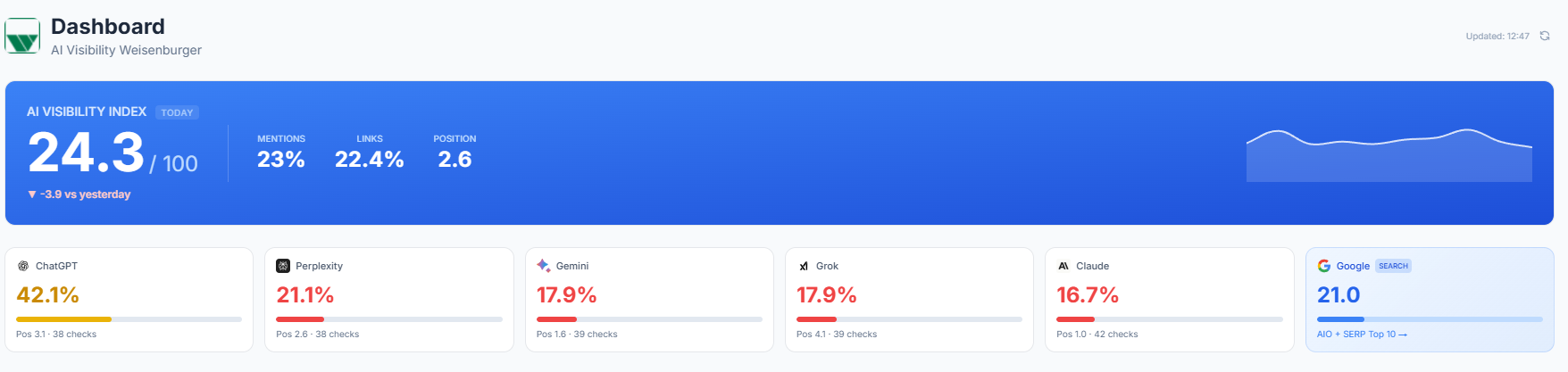
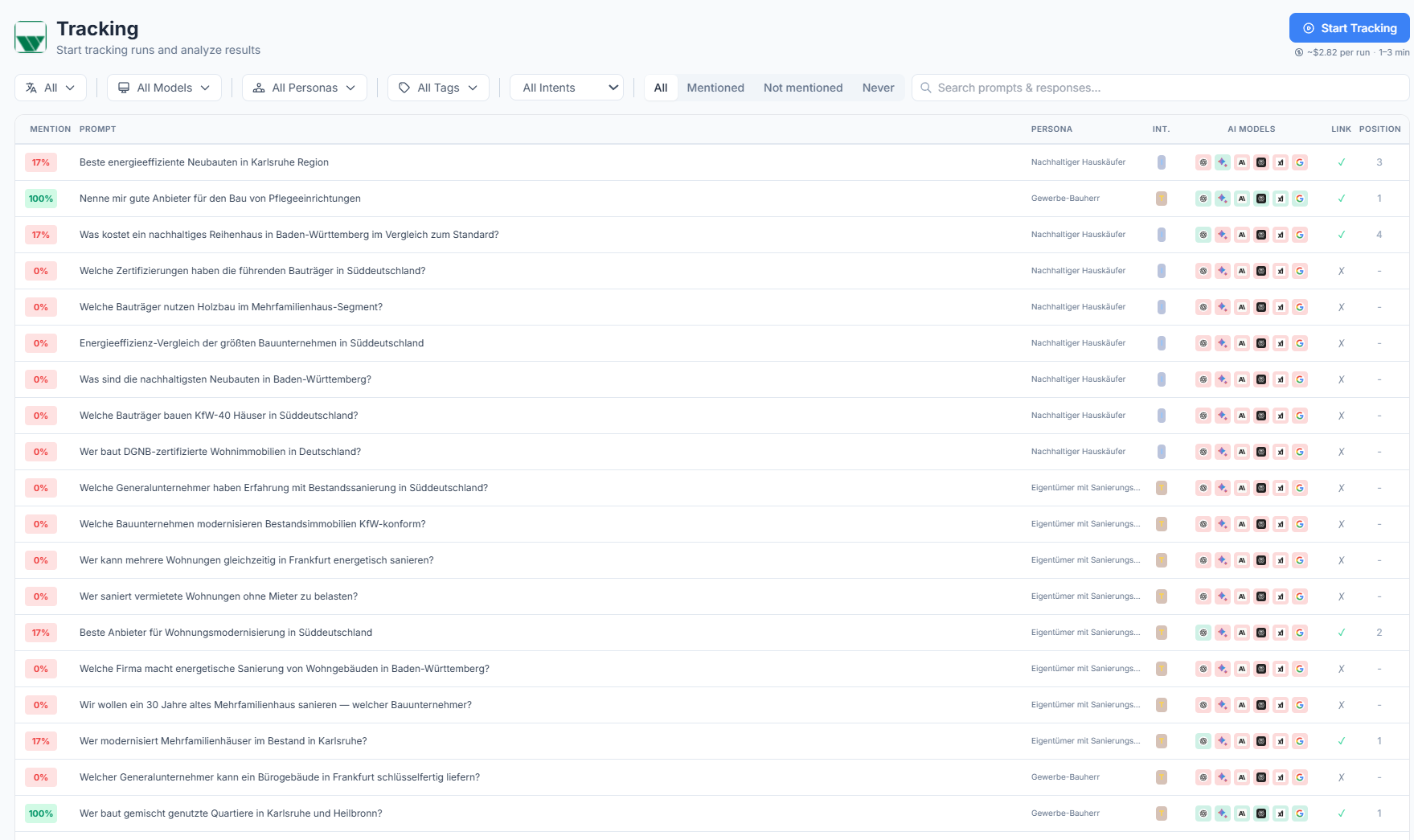
Then add the lens GA4 cannot give you: AI visibility tracking. This means running the real buyer questions in your category through the models on a schedule and recording whether you are mentioned, in what position, and whether you are cited with a link. Mention rate is your leading indicator. It moves before the traffic does, because a model has to recommend you before anyone can click through.
The useful move is to correlate the two. Line up your mention rate against your GSC impressions and your GA4 sessions over the same weeks. When mention rate climbs and branded search follows a few weeks later, you have found your AI influence signal, the one that never shows up as an AI referrer. This correlation is exactly what Truffle's AI analytics is built to surface, so you can measure AI search traffic as a system instead of guessing from a thin referral report.
How to capture more traffic from AI search
Measurement tells you where you stand. Capturing more comes down to getting cited and getting recommended. The discipline for this is GEO, or generative engine optimization, which overlaps heavily with answer engine optimization.
A few concrete moves:
Answer real buyer questions directly. Models pull from content that states a clear answer near the top, then supports it. Bury the answer and you get skipped. The answer engine optimization playbook walks through the format that gets extracted.
Structure content so machines can parse it. Clean headings, direct definitions, comparison tables, and schema all help a model lift your text into an answer. This is the core of generative engine optimization, and it rewards clarity over cleverness.
Publish an llms.txt file and keep your key facts consistent across your site, so a model that reads you gets a clean, current version of your pricing, features, and positioning.
Earn mentions off-site. Models weight what third parties say about you. Reviews, comparisons, and mentions on trusted sites feed the recommendation. Our full approach to this lives on the GEO page.
Track whether any of it worked. Ship a change, watch your mention rate for the questions you targeted, and see if AI referral and branded search move behind it. Optimizing without tracking is guessing.
See whether the models already recommend you
Run the free check on your domain and see a first score, no signup needed.
Run the free check →FAQ
Is AI search traffic worth chasing if the referral numbers are small?
Yes, because the referral number is the smallest part of it. Most AI impact is influence: a model recommends you, the user converts later through branded search or direct. Judge it by mention rate and assisted conversions, not last-click AI referrals.
Can I measure AI search traffic in GA4 alone?
Partly. You can build a referral segment for AI domains and watch the trend, which is worth doing. But GA4 misses zero-click influence entirely and buckets some AI visits into Direct, so you need AI visibility tracking alongside it to see the full picture.
What is the fastest way to get cited by AI models?
Answer the specific questions your buyers actually ask, put the answer near the top, structure it cleanly, and build third-party mentions. Then track your mention rate for those questions so you know what is working.
Want to see where you stand today?
Run the free check to see whether the models already recommend you, or compare plans to start tracking it every week.
Run the free check →Compare plans to track it every week.
On the numbers in this piece. The two visuals are illustrative diagrams, not measured data. The relationships they show, mention rate leading branded search and the influence layer outweighing visible referral clicks, are the patterns described throughout the post. Run the free check to see a first score for your own domain.